
Protecting Shooting Time
How productions keep moving by anticipating what comes next and how reacting too late turns every setup into waiting, dropped shots, and pressure to make the day.
The Problem
Momentum is one of the most important things on set. Once the day starts slowing down, everything gets harder. Setups take longer, communication gets messier, departments stop anticipating, and the crew starts chasing time.
Productions usually do not fall behind because of one giant disaster. They fall behind because departments only start solving problems when the problem arrives. Props get gathered in the moment. Wardrobe gets laid out too late. The set gets lit after everyone is already waiting.
The Real Difference Is Anticipation
Momentum is not created by moving fast in the moment. It is created by thinking ahead before the moment arrives.
A strong production has many things happening in parallel. While the current setup is being blocked, shot, or wrapped, departments are already preparing what comes next.
A reactive production works in sequence. The problem arrives first. Only then do departments start solving it. Props get gathered. Wardrobe gets prepared. The set gets lit. The crew waits while each task is completed before the next one can begin.
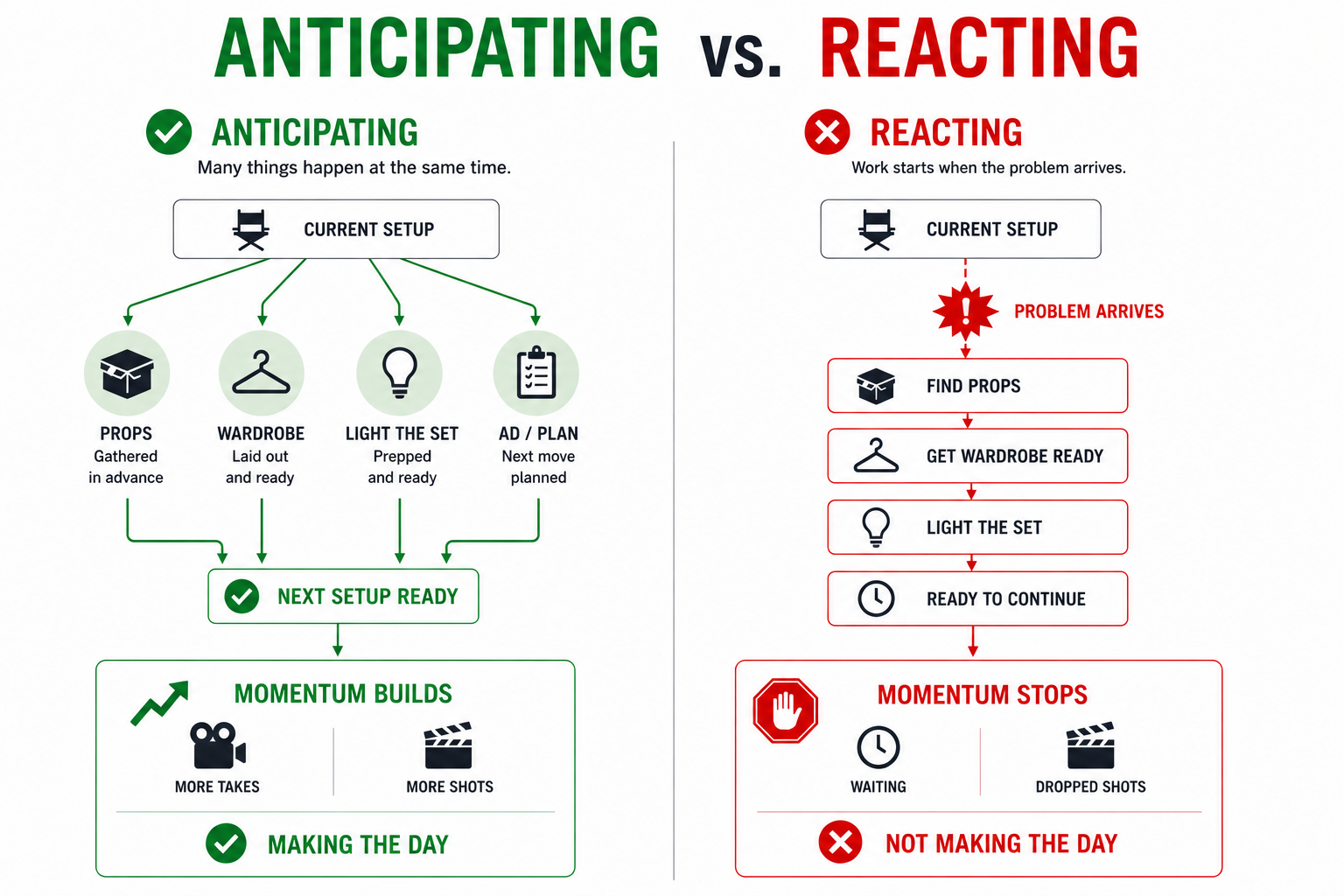
Anticipating allows departments to work in parallel. Reacting forces departments to solve problems one at a time.
- Anticipating allows departments to work in parallel
- Reacting turns the day into one task after another
- Parallel work builds momentum
- Serialized work creates waiting
- Waiting leads to dropped shots, fewer takes, and overtime pressure
The goal is not simply to stay busy. The goal is to create usable shooting time. Anticipation allows departments to work in parallel, which creates room for more takes, more shots, and better creative decisions before the schedule starts pushing back.
Why Momentum Matters
The first shot sets the tone for the whole day. When the first shot goes up late, the rest of the day gets squeezed before the production has even found its rhythm.
Momentum is not about rushing. It is about keeping the day moving. A good set does not panic its way through the schedule. It stays ahead, keeps departments pointed forward, and avoids unnecessary delays.
- The first shot gives the crew confidence or puts them on their heels
- A late first shot compresses every setup after it
- Clean handoffs keep departments moving
- Clear communication keeps the AD team from putting out fires all day
- Strong momentum creates room for more takes and more shots
Momentum Survives Change
Productions change constantly. Locations fall behind. Weather moves in. Cast availability changes. Equipment breaks. Scenes get rewritten. That is the nature of film production.
Momentum is not created by having a perfect plan. It is created by having departments that can adjust without stopping the entire production.
Good productions expect change. Weak productions are surprised by it. The difference is how much time the production loses every time changes occur.
- Schedules change
- Locations change
- Creative priorities change
- Weather changes
- Equipment problems happen
- Momentum survives when departments can anticipate and adjust quickly
How Productions Stop Moving
Small delays are dangerous because they feel harmless in the moment. Five minutes waiting for cast. Ten minutes looking for a prop. Another pause while wardrobe gets the change ready. Another delay because the set is not properly lit.
Twelve five-minute delays equals one lost shooting hour. That can be the difference between getting another take, shooting another angle, or dropping the final shot of the day.
Company moves can break momentum even faster. A move does not only cost the travel time on the schedule. Departments have to pack, travel, unload, re-establish communication, and build rhythm again before cameras roll.
- Late first shots compress the rest of the day
- Repeated five-minute delays quietly eat shooting time
- Missing props stop the set at the worst possible time
- Wardrobe changes slow the day when they are not laid out early
- Lighting the set too late makes the whole crew wait
- Company moves reset the rhythm of the day
- Momentum loss often leads to dropped shots
What Strong Productions Do Differently
Strong productions prepare the next scene or setup while the current one is still being blocked, shot, or wrapped. Departments are not waiting for the next problem. They are looking ahead.
While one scene is shooting, the next scene should already be moving: props gathered, wardrobe laid out, the set being prepared, camera thinking ahead, and the AD team keeping the day moving forward.
- Get the first shot off as soon as possible
- Keep departments thinking one setup ahead
- Gather props before they are called for
- Lay out wardrobe before the change is needed
- Light the set before the crew is standing around
- Keep cast and background where the AD team can actually find them
- Reduce unnecessary pauses between setups
Slow Is Smooth. Smooth Is Fast.
Working faster is not always the same as moving faster. A rushed setup that needs to be fixed is slower than a careful setup that works the first time.
The best crews do not look frantic. They look organized. They stop less often, make fewer mistakes, and keep the day moving because they remove friction before it becomes a delay.
- Rushing creates mistakes
- Mistakes create resets
- Resets cost more time than careful work
- Smooth departments keep production momentum alive
- Calm sets usually move faster than chaotic ones
Guard the first two hours of the day like your entire schedule depends on it, because it does.
Are departments already preparing what comes next, or are they waiting for the problem to arrive?