
Keeping Everyone on the Same Page
Productions move faster when every department trusts the same schedule, the same script revisions, the same call sheet.
The Problem
Film productions are always changing. Scenes move, locations shift, cast availability changes, weather creates problems, and the schedule gets adjusted. That is normal. The problem starts when those changes do not reach every department clearly.
Productions slow down quickly when departments are working from different information. One department has the new schedule, another is looking at an old version, and someone else never got the latest scene change.
That is when confusion starts costing time. Props may prep the wrong item, cast may get the wrong call time, wardrobe may miss a change, or the AD team has to stop and clarify something that should already be clear.
Change Is the Nature of Production
A production is ever evolving. Even a well-prepped shoot changes once real locations, weather, cast, crew, traffic, and time pressure enter the day.
Strong productions are not the ones where nothing changes. Strong productions are the ones where changes are communicated clearly, quickly, and to the right people before they create confusion on set.
- Schedules change when locations or cast availability shift
- Script revisions can affect props, wardrobe, art, and continuity
- Call times may change when the shooting order changes
- Departments need to know which version is current
- The change itself is not the problem, unclear communication is
Why Accurate Information Matters
A production runs on information. Every department depends on the schedule, scene numbers, script revisions, cast calls, location details, props, wardrobe, background, transportation, and timing.
When the information is current, departments can prep with confidence. When it is outdated or unclear, people slow down, double-check everything, and stop trusting what they are looking at.
- Departments need the latest schedule to plan the day
- Call sheets need to match the actual shoot schedule
- Script revisions need to reach the right departments
- Scene changes affect props, wardrobe, cast, and locations
- Wrong information creates delays before anyone notices
How Productions Lose Sync
Productions lose sync when information starts living in too many places. A PDF gets emailed, a spreadsheet gets updated, a text thread changes the plan, and the call sheet no longer matches what departments were told earlier.
On a longer shooting schedule, there may be time to catch those mistakes. On a short shoot, bad information can keep the production from making the day. The crew starts reacting instead of anticipating, and the AD team spends time cleaning up confusion instead of moving the day forward.
- Old schedules create wrong assumptions
- Duplicate documents create conflicting answers
- Late revisions slow prep down
- Side conversations leave departments out of the loop
- Bad information makes departments reactive
- Once departments stop trusting the schedule and call sheet, the pace slows down
Information Creates Speed
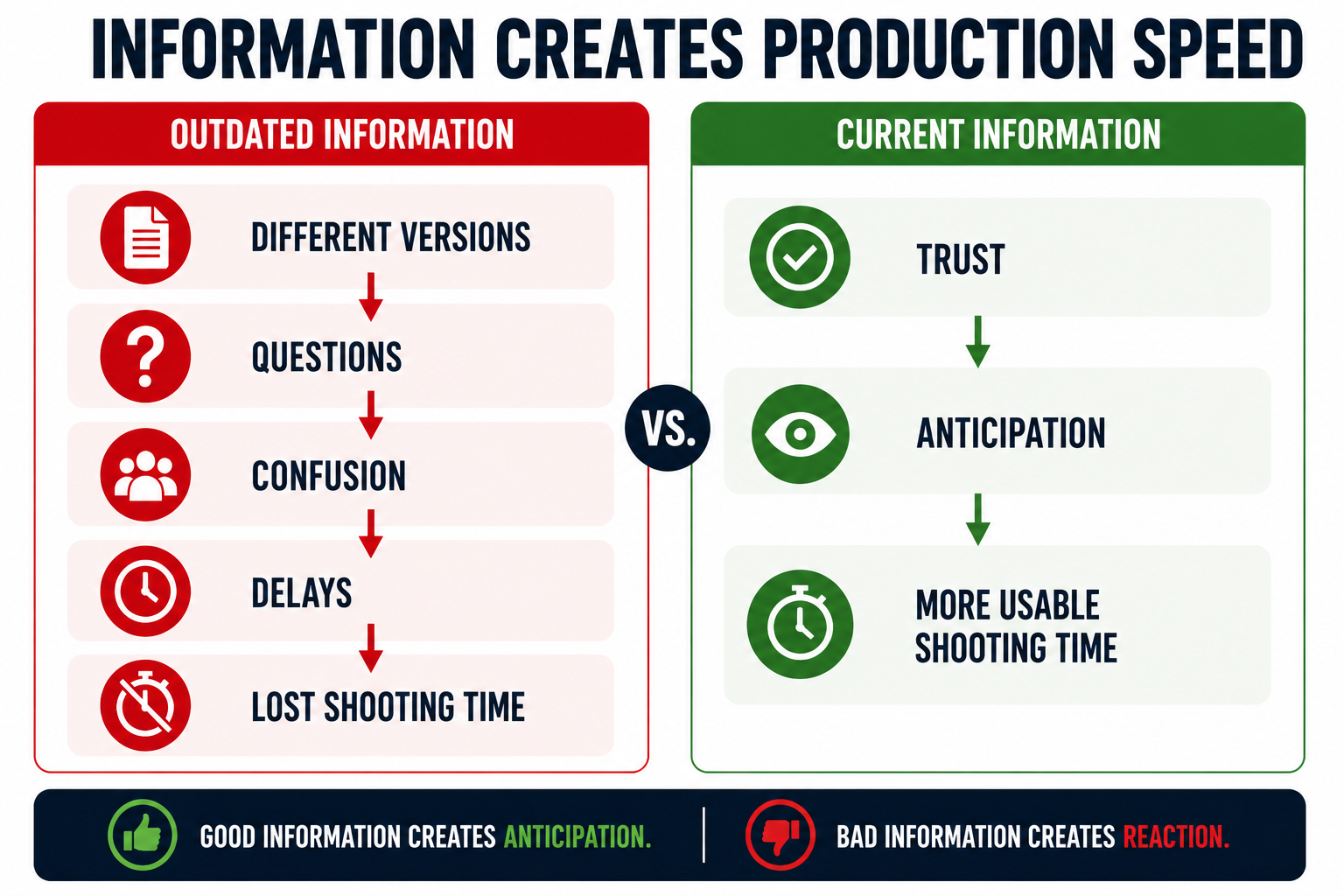
Productions do not only move at the speed of the crew. They move at the speed of the information as well.
When departments trust the schedule, they can anticipate what is coming next. Props can be ready before they are asked. Wardrobe can prepare changes ahead of time. Transportation can stage pickups before the crew is waiting. Locations can be ready when the company arrives.
That is the real value of keeping everyone on the same page. Good information allows departments to think ahead. Bad information forces them to react.
What Strong Productions Do Differently
Strong productions accept that things will change. They make sure the latest changes reach the right departments before those changes create problems on set.
When the schedule changes, the right people know. When a revision lands, the affected departments are told. When the call sheet goes out, it reflects the latest schedule.
- Keep one trusted version of the script and schedule
- Make revision updates clear and visible
- Confirm critical changes with affected departments
- Make sure the call sheet matches the latest schedule
- Reduce duplicate documents and side versions
- Get information current before it gets distributed
The Real Production Lesson
Change is not the enemy. Change is part of production. The real problem is when changes are unclear, scattered, or trapped in side conversations.
Accurate information saves time because it reduces hesitation. Departments move faster when they trust the schedule, the call sheet, and the latest script revisions.
The moment people stop trusting the information, everything slows down. They ask more questions, wait for confirmation, repeat work, and stop anticipating.
On a good set, the script, schedule, and call sheet are not noise. They are the road map for the day.
The change itself is rarely the problem. The problem is when the change does not reach everyone who needs it.
When things change, does every affected department know about it?